Spotlight On... Luci Attala

22nd June 2026
Q1. What aspect of REPAIR are you most involved in?
I’m co-leading the Lived Experience thread, which is concerned with how people experience biophilic living. The thread uses a range of methods from different disciplines, one of which is anthropology. Anthropology uses informal conversation and deep immersion in communities, so by spending time with people who live in the building and listening to their experiences and hearing what they think works and doesn’t, we can form a clearer picture of the reality of biophilic living in the BIOME. This will help us understand where improvements can be made and what gets in the way of adopting this method of living – and will provide evidence to inform future developments and policy decisions.
Q2. What excites you most about your work?
People! It’s always people. I am always amazed at the insights people offer and their willingness to share. Everyone sees things differently and understanding these different perspectives allows a fuller picture of how people really live and what they believe to emerge. With regards this project specifically: I’m honoured to be part of something that has the potential to make an immediate improvement to people’s lives. What a gift it is to have the potential to generate tangible benefits for individuals and communities. At a time when so many societal and environmental challenges require urgent attention, I think research should strive to produce meaningful and demonstrable real-world outcomes – and I believe this project is doing that.
Q3. What does biophilic living mean to you?
The word biophilic means life loving. Of course, this can be interpreted in multiple ways. Biophilic design, on the other hand, suggests that buildings, designed and constructed with organic materials, formed of organic shapes and that find ways to dissolve physical barriers between people and the natural environment, are better for our health. The BIOME puts the residents in relationship with plants and more organic forms. It remains to be seen what this does. While there is growing evidence supporting the benefits of biophilic environments, understanding how these features are experienced in everyday life remains an important area of our investigation. Personally, I am biased towards plants and love growing veg. Getting soil under my fingernails makes me happy. But I know that’s not how everyone feels about grubby hands! It’s almost impossible to avoid artificial materials, but I do my best to avoid plastics and the like at home.
Q4. Have your views on biophilic living changed since joining REPAIR?
Not drastically, but yes. I can see how many compromises are required to make it a reality in a heavily urban setting. I can also see – in contrast to advocates of this form of living – that it is not for everyone, and we have to accommodate differences if we are to live together well. So the project has highlighted the complexity involved in translating biophilic principles into practice. So, one of the key lessons so far has been to recognise that successful approaches to sustainable living must remain attentive to difference and inclusivity rather than assuming a single model will suit everyone. How to do this is a careful – or care-filled – balance, that acknowledges different cultures and needs to focus less on what academics imagine the public needs and more on working out what living together well looks like in practice.
Q5. What is the most surprising thing you have learnt through the project?
One of the most striking observations has been the extent to which institutional processes can sometimes constrain innovation, often in the context of managing risk and ensuring compliance. At the same time, I’ve been encouraged by how ready many people are for change – in this case, the kind of change that might abate the loneliness of modern urban living and makes people feel useful and connected. As far as I can tell, this suggests there is a significant appetite for approaches that address both environmental and social challenges simultaneously. Bringing life into city centres tends to focus on economics (sometimes framed as ‘making a living’) – biophilic thinking encourages biodiversity, literally things that are alive – into urban spaces, shifting the conversation and reminding us that cities can support livelihoods and life itself.
Q6. What do you enjoy most about working in a transdisciplinary team?
Enjoy most? I thought you’d ask, what I find most challenging! :-)
Transdisciplinary working is understood very differently, depending on setting. What we’re doing is a method advocated by the International Science Council and is fairly radical, because it’s not just about getting a small portion of information from the public or civil society; it’s about working alongside societal partners in meaningful ways from the outset. The reasoning behind this is that if solutions are reached in genuine collaboration, they are more likely for the public to be open to adopt. We need this! So often researchers make conclusions about the public with scant reference to them or their wishes – and then wonder why the public are resistant to their suggestions. Face palm. The way we are working recognises that we are in this world together and any changes need to work for all of us.
Q7. What are you most looking forward to?
I’m looking forward to seeing how the residents inhabit the building and what it does to the centre of Swansea. It has real potential to add significantly to the centre – depending on how it develops – I’m hoping that the public will embrace it and that its influence will spread and improve lives. A bit idealistic, I know, but wouldn’t it be wonderful, if the hard grey edges of all the concrete and tarmac were softened with different forms and colours and if people opened to the beauty of ‘nature’ in the heart of an industrial city?
More broadly, I am interested in whether initiatives such as this can encourage new ways of thinking about urban living and strengthen connections between people and the natural environment. If successful, its influence could extend beyond the building itself and contribute to wider discussions about sustainable and liveable cities.
Q8. Tell us about a place in nature that is important to you and why.
A result of being an anthropologist is that I’ve lived in several places. I’m currently in Swansea and it’s my garden that inspires me. It’s tiny and messy but it produces colours, fragrances, shapes plus it gives me fruit and veg each year (peas, onions, potatoes, carrots, cucumbers, lettuce, beans, leeks, courgettes, herbs, chilis, strawberries, blueberries, grapes, cherries, pears, apples and raspberries). And it is a lively, noisy haven for birds and other creatures passing through. It bring me immense joy. In the sad ocean of plastic grass and paving that others prefer for their tiny patches of ‘outside’, my tiny garden feels like heaven. If we are given stewardship of a place, I feel I owe it to that place to care for it so that, in relationship, we can grow and ‘become’ together.
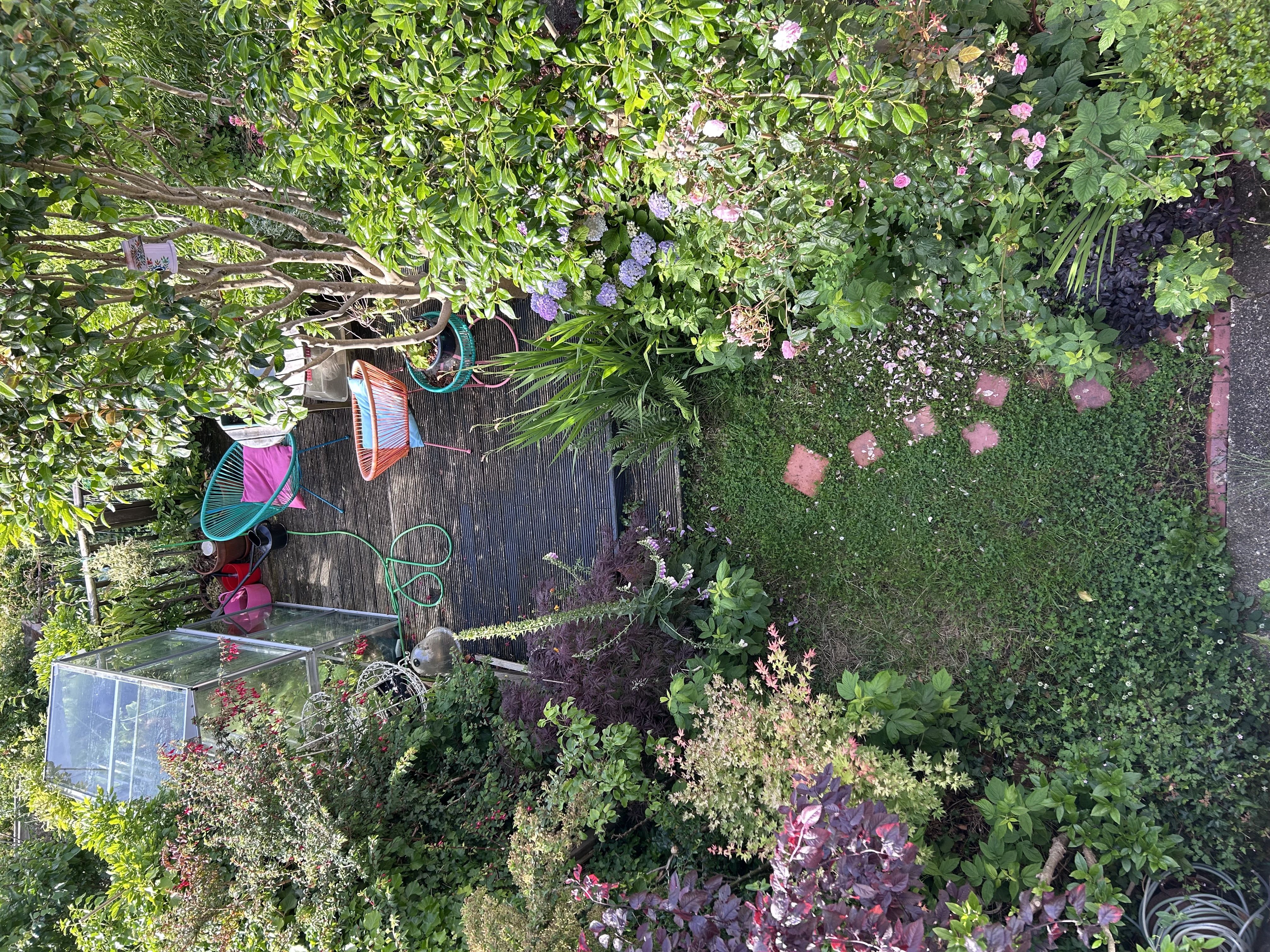 My Garden in 2026